
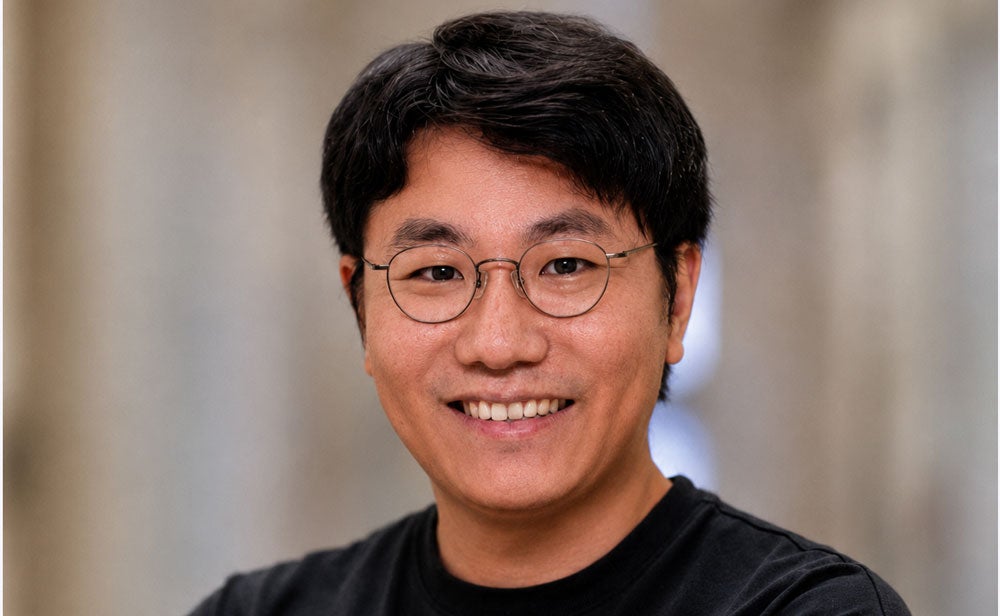
Sangyeon (Fred) Cho joined Rice University’s Department of Bioengineering as an assistant professor on July 1, 2026. His arrival strengthens the department’s impact on precision medicine and biomedical imaging, bringing groundbreaking expertise in nanophotonics, optical probes and single-cell tracking.
"Fred brings a wealth of experience translating innovative optical technologies to biological applications,” said Cynthia Reinhart-King, department chair and John W. Cox Chair of Bioengineering. “With the addition of his lab to the department, we expand our opportunities for interdisciplinary collaborations and transformative pioneering research that advances cellular dynamics and therapeutic discovery."
At Rice, Cho will direct the Creative Nanobiophotonics Laboratory and further develop nanolaser particles, a new class of optical probes designed to read, track and compute cellular dynamics. By emitting ultra-narrowband signals, these microscopic particles overcome the spectral crowding of conventional fluorescence, allowing thousands of individual cells to be uniquely barcoded and monitored over time. His research aims to reveal how cellular heterogeneity drives cancer progression, immune responses, cardiac dynamics and therapeutic resistance, potentially opening new avenues for cell therapy and cancer immunotherapy.
Cho has also demonstrated the world’s smallest laser and the first half-wavelength laser, measuring just 190 nanometers. His team is now working to push beyond the fundamental diffraction limit of lasers, potentially opening new possibilities for on-chip bio-optical sensing.
“Nanolasers open a new frontier for measuring and computing with living systems,” Cho said. “Our ambition is to harness the extraordinary multiplexing power of light to build new forms of semiconductor bio-optical computing that can ultimately improve human health. It is especially meaningful to pursue this vision at Rice, where Nobel Prize winners Richard Smalley and Robert Curl shaped modern nanoscience. I am excited to push the world’s smallest nanolasers even further here and transform them into technologies that can make a lasting impact on human life.”
Before joining Rice, Cho was an assistant professor at the Wellman Center for Photomedicine at Massachusetts General Hospital and Harvard Medical School, with an affiliated faculty appointment in MIT Health Sciences and Technology. He earned his Ph.D. in medical engineering and medical physics from the joint Harvard–MIT Health Sciences and Technology program and his B.S. in chemistry from Korea Advanced Institute of Science and Technology (KAIST).
“I came to Rice to make a major impact at the intersection of semiconductors and medicine,” Cho said. “Houston uniquely brings together Texas’ rapidly growing semiconductor ecosystem and the Texas Medical Center, while Rice Bioengineering provides exceptional students, colleagues and staff who make ambitious interdisciplinary research possible. I believe this is one of the best environments in the world to turn bold scientific ideas into technologies that matter.”
Cho is a CPRIT Rising Star Scholar and a member of the Ken Kennedy Institute. His honors include an NIH K25 Career Development Award from the National Cancer Institute, selection as an Optica Ambassador, the MIT Martha L. Gray Prize for Excellence in Research and recognition as Best Samsung Graduate Scholar.